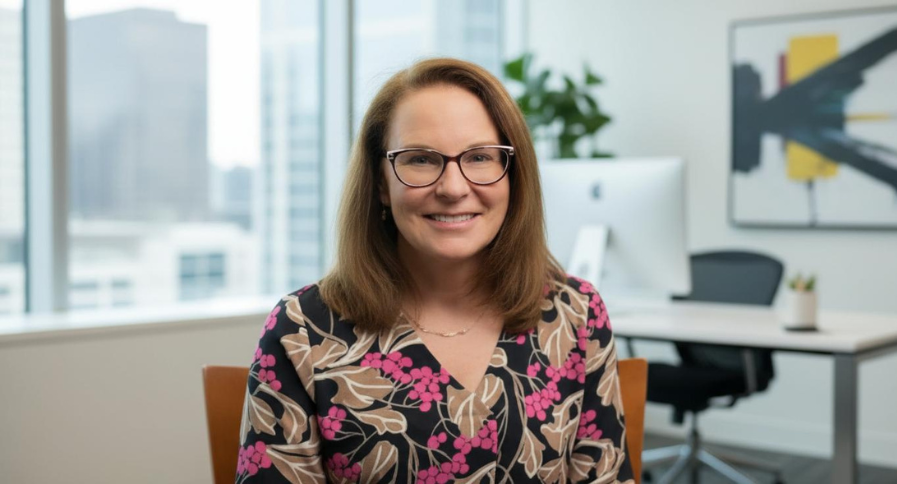
For nearly 30 years at CHAD, I have had the privilege of walking alongside people facing chronic disease, disability, and end-of-life realities. I have listened to parents describe frightening diagnoses. I have watched families learn entirely new vocabularies of treatment and survival. I have held space for fear, exhaustion, and hope.
In every conversation, I tried to do one thing: put myself in their shoes.
What if that were my child diagnosed with cystic fibrosis? What if that were my parent living with Alzheimer’s? What if that were me hearing the words "chronic illness?"
I believed I understood.
Then, on September 4, 2025, at 3:13 in the afternoon, a notification appeared in the app on my phone.
It was my pathology report. Breast cancer.
In an instant, empathy became something far heavier — terror, sadness, anger, disbelief — all at once. The professional understanding I had built over decades suddenly became deeply, frighteningly personal.
Since that moment, life has been measured differently. There have been surgeries. Scans. More scans. Sleepless nights when your mind refuses to rest. Radiation. And medications — the part that can feel the most terrifying because they are constant reminders that your life has changed in ways you cannot undo.
And beneath it all sits a new awareness: the future you assumed you had is no longer guaranteed. It may be altered. It may be shortened. It will certainly be different.
But along this path, I’ve also learned something important that I wish more people understood — something the families we serve have known all along.
There is a profound difference between remission and cure.
A cure means the disease is gone and it is not expected to return. The chapter is closed.
Remission, however, means the signs of cancer in my case are reduced or undetectable. Treatment has worked. Today, things look good. But there are no promises about tomorrow. Monitoring continues. Medications may continue. The uncertainty continues.
Remission is hope — but it is also vigilance.
It means celebrating clean scans while still living with the quiet knowledge that follow-up appointments will always be part of your calendar. It means gratitude mixed with worry. Relief paired with lingering fear.
For many of us, remission can sometimes sound like the end of the story.
For patients and families, it is the beginning of learning how to live with uncertainty.
My diagnosis has given me a perspective I never wanted but one that deepens my commitment to the work we do at CHAD. Every day, our member agencies support people who are navigating this complicated space between crisis and stability, between good news and what-ifs.
Now, when I speak with someone facing a diagnosis, I don’t just imagine myself in their shoes.
I am.
And I carry even greater respect for the courage it takes to keep going, to keep hoping, and to keep living fully in the middle of uncertainty.
If there is anything my journey has reinforced, it is this: compassion matters, accurate information matters, and walking beside people — for the long haul — matters.
More than ever, I am grateful that this is the work we do together.
Michelle Grossman, President and CEO